
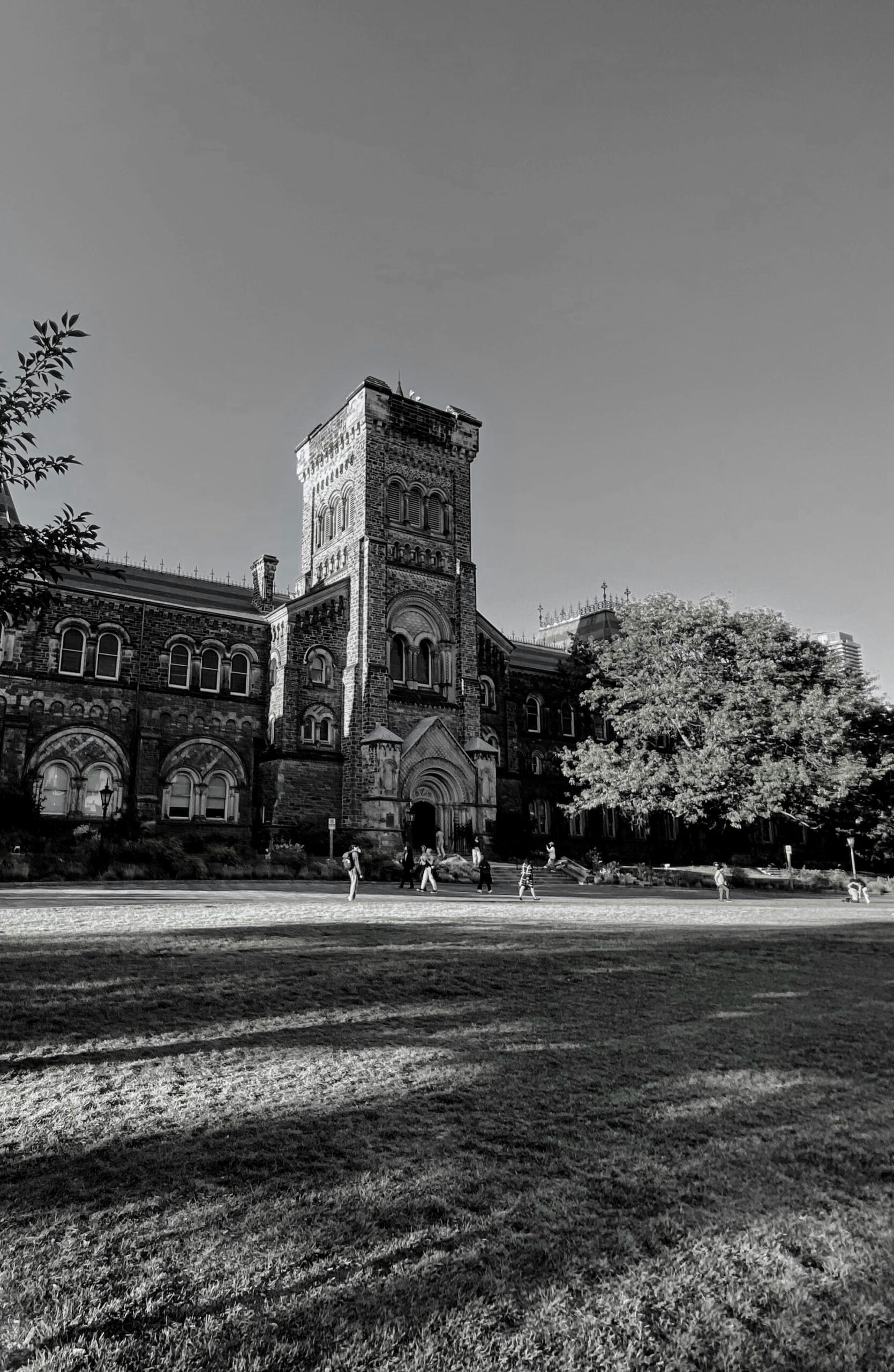
Below is an excellent article written by lawyer John Carpay, President of the Justice Centre for Constitutional Freedoms, located in Calgary, Alberta.
The article discusses the tragedy that is taking place at Canadian universities, where, shockingly, freedom of speech and thought are prohibited. Instead, the universities insist that only Marxist left-wing concepts are to be heard in their institutions. Freedom of Speech is a right protected by Article 18 of the Universal Declaration of Human Rights, and Article 19 of the UN Covenant on Civil and Political Rights, and is also included in Section 2 of Canada’s Constitution, the Charter of Rights.
The time has come for the provincial governments that provide billions of dollars to support universities, to withdraw financial support from universities until such time as they permit freedom of speech and thought in their institutions.
Since this issue has such a detrimental effect on our future generations, we are bringing it to your attention.
Please contact the Premier of your province and your Minister of Education/Colleges, Universities (see below for contact information) and request that your province withdraw funding from universities unless they agree to protect freedom of speech and thought.
_________________________
It’s Time to Defund Universities that Censor Speech on Campus
By:
John Carpay, B.A., LL.B.
President
Justice Centre for Constitutional Freedoms
It’s high time for Canadians to start demanding that provincial governments stop giving billions of tax dollars to public universities which demonstrate by their actions that they have no love for inquiry, debate, and truth.
The arrest of Frances Widdowson at the University of Victoria for seeking to engage students in debate on campus is the latest example of an aggressive anti-intellectual trend that grows worse on campus every decade.
On Dec. 2, 2025, Widdowson was charged with trespassing after attempting to engage in an open dialogue with students at UVic. She showed up on campus with a sign that read simply “What remains?” She hoped to engage students in discussions about whether they believe that 215 children are buried at the former Kamloops Indian Residential School.
To this day, not one body has been found at the site in Kamloops. Canadian taxpayers have provided more than $12 million for excavations at Kamloops and other former residential school sites in B.C. that could tell us the truth. However, the local Kamloops aboriginal council continues to refuse to conduct an excavation, despite receiving all this money. Yet government, media, and academic narratives persist about the “genocidal” nature of residential schools. Widdowson, a former professor at Mount Royal University, is one of the few academics in Canada who isn’t afraid to challenge dominant but unsupported narratives like this one.
Initially, the only targets of censorship, harassment, and bullying were campus pro-life groups. For example, the Simon Fraser Student Society revoked club status from the pro-life club SFU LifeLine after declaring that all clubs must take a pro-choice stance under a new “Reproductive Rights” policy. The University of Alberta condoned the bullying, censorship, and intimidation of one of its own student groups, UAlberta Pro-Life. The university was ultimately rebuked by the Alberta Court of Appeal for imposing a $17,500 “security fee” that no student club could afford. The University of Calgary found pro-life students guilty of non-academic misconduct for having peacefully expressed their unpopular opinions on campus, but was rebuked by the court in Wilson v. University of Calgary.
Since the 1990s, the cancer of censorship has been tolerated and coddled by university officials across Canada. Predictably, this cancer has spread. It is no longer limited only to pro-life groups.
Today, the vast majority of Canadian universities have a strong commitment to “diversity,” “equity” and “inclusion” in their mission, vision, and values statements. They impose woke ideology on all students and faculty. They have a very limited willingness to uphold free expression, open inquiry, and the pursuit of truth.
The Equity, Diversity and Inclusion Institutional Capacity-Building Grants of the federal government also undermines free speech and the pursuit of truth. In order to qualify for these grants, universities must impose mandatory training for students, faculty, and staff on “anti-oppression” and “unconscious bias” strategies. However, the biggest funders of public universities are Canada’s provincial governments, not the federal government.
It would take not just a book, but a large encyclopedia set, to document all the cases of Canadian universities and student unions censoring speech on campus in the past 30 years. The following are just a few examples.
In 2017, McMaster University in Hamilton allowed a loud, angry mob to shout down Jordan Peterson, then a professor at the University of Toronto, and prevent him from speaking. The university’s president has not apologized.
Mount Royal University, in addition to firing Widdowson because of her public disagreement with woke ideology, also cancelled its instructor Mark Hecht, in response to people claiming to be offended by his 2019 Vancouver Sun column that criticized diversity.
In 2019, Simon Fraser University cowered to extremists by cancelling a panel discussion titled “How Media Bias Shapes the Gender Identity Debate.” The panelists included Meghan Murphy and Jonathan Kay, and moderator Lindsay Shepherd. In violation of the Criminal Code, trans activists threatened to physically disrupt the event by engaging in property destruction and false fire alarm activation. SFU, like so many other universities, practiced cancel culture under the guise of “safety and security.”
Canadian universities ignore the fact that threats to safety and security come uniquely from intolerant thugs who violate the Criminal Code, and not from those who peacefully express their views. Yet universities routinely reward those who threaten criminal actions (e.g. disrupting and obstructing events) and punish the innocent by cancelling events.
The University of British Columbia Free Speech Club booked space to host journalist Andy Ngo on Jan. 29, 2020. Ngo was to speak on the topic of antifa violence. The club paid a room booking deposit in November, but UBC rescinded the event in December with a vague mention of “safety” and “security.” More than five years later, this matter is still before the courts.
In 2020, the University of Alberta fired anthropology professor Kathleen Lowrey, who describes herself as a gender-critical feminist, from her position as associate chair of undergraduate programs, because anonymous complainants said she made the learning environment “unsafe.” Neither Dean of Students André Costopoulos nor the UAlberta department of Equity, Diversity, and Inclusion and Human Resources Services would speak to the question of how many individuals complained about Lowrey and what the complaints alleged.
In 2020, evolutionary ecologist and Dean of Graduate Studies at Laurentian University David Lesbarrès sent out a tweet that included a hashtag considered contentious among the activist class: “#AllLivesMatter.” Lesbarrères was removed from his position as dean by the university’s president, who claimed that his tweet “hurt many people.”
In 2021, the University of Winnipeg kicked a student out of its education program for having attended a peaceful, outdoor, off-campus rally against lockdown restrictions that violated Charter freedoms. The university only reinstated the student after receiving a legal warning letter from a Justice Centre lawyer.
Patrick Provost, professor of microbiology and immunology, was suspended and ultimately fired by Laval Université. An expert in micro-RNA, the small molecules that help regulate genes, Provost criticized the COVID vaccines in December 2021. He argued that the risks of COVID vaccination in children outweighed the benefits because of the potential side-effects from mRNA vaccines. Rather than facilitating debate, the university fired him in 2022.
The University of Lethbridge is currently being sued over its decision in 2023 to cancel Widdowson’s lecture, “How Woke-ism Threatens Academic Freedom.”
The presidents of Canadian universities, along with their boards and senior staff, have made it abundantly clear that they have no intention of restoring free expression on campus. They appeal to “academic freedom” as somehow conferring on them a right to censor unpopular views on campus. They impose woke ideology on students and staff. They want to continue receiving billions of dollars from taxpayers each year, even while refusing to facilitate the pursuit of truth through open inquiry and debate.
Provincial governments can start fixing this problem tomorrow. It’s not complicated. The ministers of advanced education or post-secondary learning in each province can inform university presidents that continued taxpayer funding will be provided only on the condition that universities protect free speech and facilitate the pursuit of truth through open inquiry and debate. Provincial legislation can be modified if necessary. If a university refuses to meet this fair and basic standard, it is free to seek out funding from sources other than government.
Taxpayers and their elected representatives have been far too tolerant of egregious misconduct, for far too long.
John Carpay, B.A., LL.B. has defended campus free speech in courts of law and in the court of public opinion for more than two decades. He is President of the Justice Centre for Constitutional Freedoms (jccf.ca).
Contact Information for Canadian Premiers:
Hon. Danielle Smith
Premier of Alberta
307 Legislature Building
10800 – 97 Avenue
Edmonton, AB T5K 2B6
premier@gov.ab.ca
Hon. David Eby
Premier of British Columbia
PO Box 9041
Station Provincial Government
Victoria, BC V8W 9E1
premier@gov.bc.ca
Hon. Wab Kinew
Premier of Manitoba
204 Legislative Building
450 Broadway
Winnipeg, MB R3C 0V8
premier@manitoba.ca
Hon. Susan Holt
Premier of New Brunswick
Chancery Place
PO Box 6000
Fredericton, NB E3B 5H1
premier@gnb.ca
Hon. John Hogan
Premier of Newfoundland and Labrador
Confederation Building, East Block
PO Box 8700
St. John’s, NL A1B 4J6
premier@gov.nl.ca
Hon. Tim Houston
Premier of Nova Scotia
PO Box 726
Halifax, NS B3J 2T3
premier@novascotia.ca
Hon. Doug Ford
Premier of Ontario
Legislative Building
Queen’s Park
Toronto ON M7A 1A1
premier@ontario.ca
Hon. Rob Lantz – Chair
Premier of Prince Edward Island
Shaw Building
PO Box 2000
Charlottetown, PE C1A 7N8
premier@gov.pe.ca
Hon. François Legault
Premier of Québec
Édifice Honoré-Mercier, 3e étage
835, Boul. René-Lévesque Est
Québec QC G1A 1B4
premierministre@quebec.ca
Hon. Scott Moe
Premier of Saskatchewan
226 Legislative Building
Regina SK S4S 0B3
premier@gov.sk.ca
Hon. R.J. Simpson – Vice-Chair
Premier of the Northwest Territories
PO Box 1320
Yellowknife, NT X1A 2L9
premier@gov.nt.ca
Hon. P.J. Akeeagok
Premier of Nunavut
PO Box 2410
Iqaluit NU X0A 0H0
pakeeagok6@gov.nu.ca
Hon. Mike Pemberton
Premier of Yukon
PO Box 2703
Whitehorse YK Y1A 2C6
premier@yukon.ca
Contact Information for Canadian Ministers of Education:
Hon. Myles McDougall
Minister of Advanced Education
403 Legislature Building
10800 – 97 Avenue
Edmonton, Alberta T5K 2B6
Calgary.FishCreek@assembly.ab.ca
Hon. Jessie Sunner
Minister of Post-Secondary Education and Future Skills
Parliament Buildings
Victoria, BC V8V 1X4
AG.Minister@gov.bc.ca
Hon. Renée Cable
Minister of Advanced Education and Training
Legislative Building
Room 317
450 Broadway
Winnipeg, MB R3C 0V8
minaet@manitoba.ca
Hon. Jean-Claude D’Amours
Minister of Post-Secondary Education, Training and Labour
Legislative Assembly of New Brunswick
706 Queen Street
Fredericton, NB E3B 1C5
Jean-Claude.D’Amours@gnb.ca
Hon. Paul Dinn
Minister of Advanced Education and Skills
Confederation Building
P.O. Box 8700
St. John’s, NL A1B 4J6
MHAPaulDinn@assembly.nl.ca
Hon. Brendan O. Maguire
Minister of Advanced Education
Department of Advanced Education
1505 Barrington Street
11th Floor, Maritime Centre
Halifax, NS B3J 3K5
MinisterAdvancedEducation@novascotia.ca
Hon. Nolan Quinn
Ministry of Colleges, Universities, Research Excellence and Security
5th Floor
438 University Avenue
Toronto, ON M7A 1N3
nolan.quinn@pc.ola.org
Hon. Robin Croucher
Minister of Education and Early Years
2nd Floor
16 Fitzroy Street
Charlottetown, PE C1A 7N8
rdcroucherminister@gov.pe.ca
Hon. Pascale Dery
Ministre de l’Enseignement Supérieur
34, Notre-Dame, Bureau 105
Repentigny, Québec J6A 2T8
Pascale.Dery.REPE@assnat.qc.ca
Hon. Ken Cheveldayoff
Minister of Advanced Education
Legislative Building
Room 307
2405 Legislative Drive
Regina, SK S4S 0B3
ken.cheveldayoff.mla@sasktel.net
Hon. Caitlin Cleveland
Minister of Education
Minister’s Office
P.O. Box 1320
Yellowknife, NT X1A 2L9
Caitlin_Cleveland@gov.nt.ca
Hon. David Akeeagok
Minister of Education
607 Queen Elizabeth Way
Unit 301
Iqaluit, NU X0A 3H0
dakeeagok7@gov.nu.ca
DavidAkeeagok@niaqunnguumla.ca
Hon. Scott Kent
Minister of Education
Yukon Legislative Assembly
Box 2703
Whitehorse, Yukon Y1A 2C6
Scott.Kent@yukon.ca